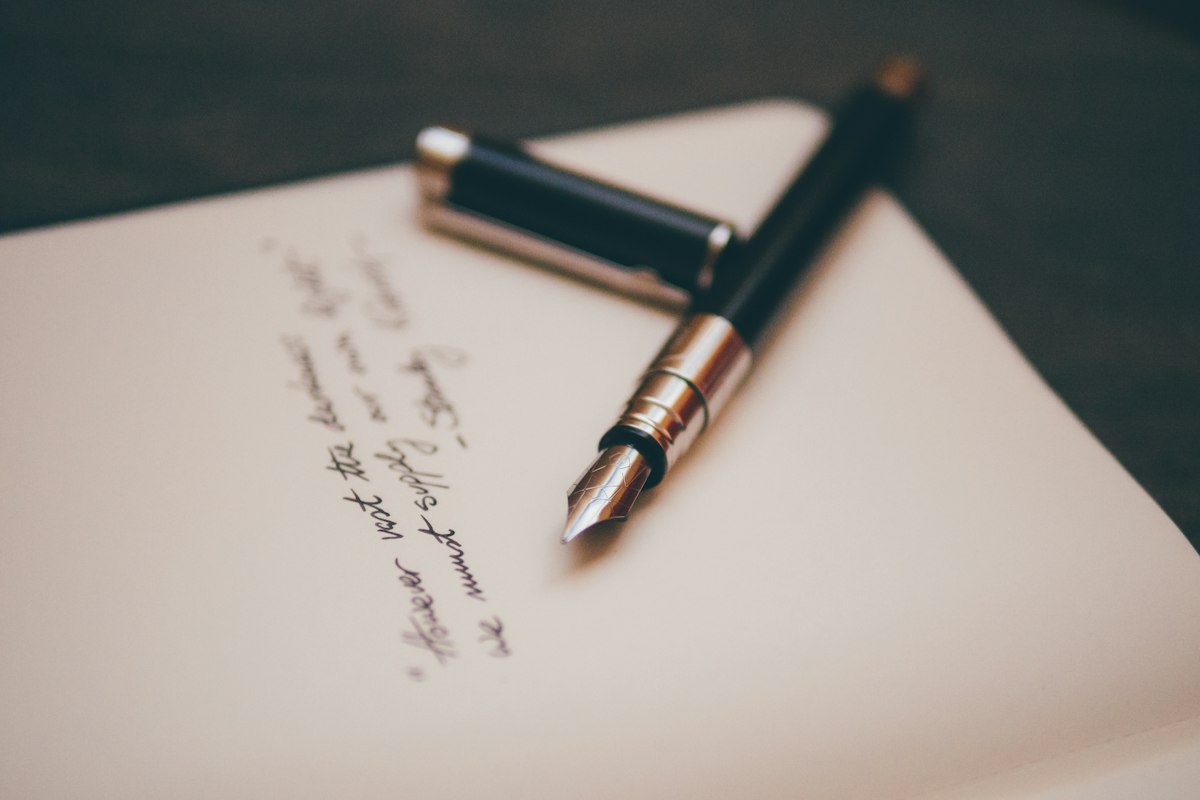
There is a sentence in my grandmother's recipe book that no language model could produce. It reads: "Add butter until it looks right - you'll know." The instruction is incomplete. It is imprecise. It assumes a body of knowledge that is never stated because it was transmitted through decades of standing in a kitchen, watching hands that knew things words couldn't capture. It is, in every way that matters, a perfect sentence. It is hers.
I think about that sentence often when people ask me what makes human writing irreplaceable. The answer is not skill, though skill matters. It is not craft, though craft is essential. The answer is specificity - the irreducible particular of a single person's way of encountering the world. Your sentences carry the weight of your life. AI's sentences carry the weight of statistics.
What Voice Actually Is
We talk about "voice" in writing as if it were a technique - something you develop, like parallel structure or the use of active verbs. Writing programs treat voice as a learning outcome. Editors speak of "finding your voice" as if it were misplaced, tucked behind the couch cushions of your prose style.
But voice is not a technique. Voice is the totality of who you are, expressed through language. It is every book you've read and every conversation you've overheard and every heartbreak that changed how you understand kindness. It is the rhythm of the language your parents spoke, the cadence of the town where you grew up, the vocabulary you absorbed from a job you held at nineteen and have never quite lost. Voice cannot be learned in a workshop. It can only be lived into.
The Specificity Test
Here is a test I give my students. Write a sentence about morning that only you could write. Not a sentence about morning in general - there are millions of those, and AI can generate perfectly serviceable ones. Write a sentence about your morning. The specific light in your specific kitchen. The particular sound your particular coffee maker makes. The exact way your particular cat stares at you when you're late with breakfast.
The sentences that come back are always the best writing my students produce all semester. "The 6 a.m. train makes the window hum at a frequency that my dog interprets as a personal threat." "My roommate's alarm is a song by a band I used to like, and every morning it plays I like them a little less." "The shower takes ninety seconds to get hot, which is exactly how long it takes me to regret everything I said the night before."
These sentences are untouchable. No model can produce them because no model has lived them. They arise from the intersection of a particular consciousness and a particular moment, and that intersection is unrepeatable.
Why This Matters Now
In 2026, the temptation to flatten your writing is enormous. AI detection tools punish precision. Editors worry about text that sounds "too polished." The safest writing is generic writing - and generic writing is exactly what AI does best. If you sand down your edges to avoid suspicion, you become indistinguishable from the machine. The defense against being mistaken for AI is not to write worse. It is to write more specifically.
Write the sentences only you can write. Write the details that come from your body, your history, your corner of the world. Write the observations that no training data contains because they happened only to you. This is not a craft exercise. It is an act of identity in an era that threatens to dissolve identity into statistical averages.
Add butter until it looks right. You'll know.